Inverter DC window
Check minimum, nominal and maximum battery voltage accepted by the inverter or DC equipment.
VERIFY37.5–54.75V vs 40–58.4VVoltage selection · 48V vs 51.2V
The correct choice starts with the inverter or DC-bus operating window—not with the familiar nominal-voltage label.
Buying question
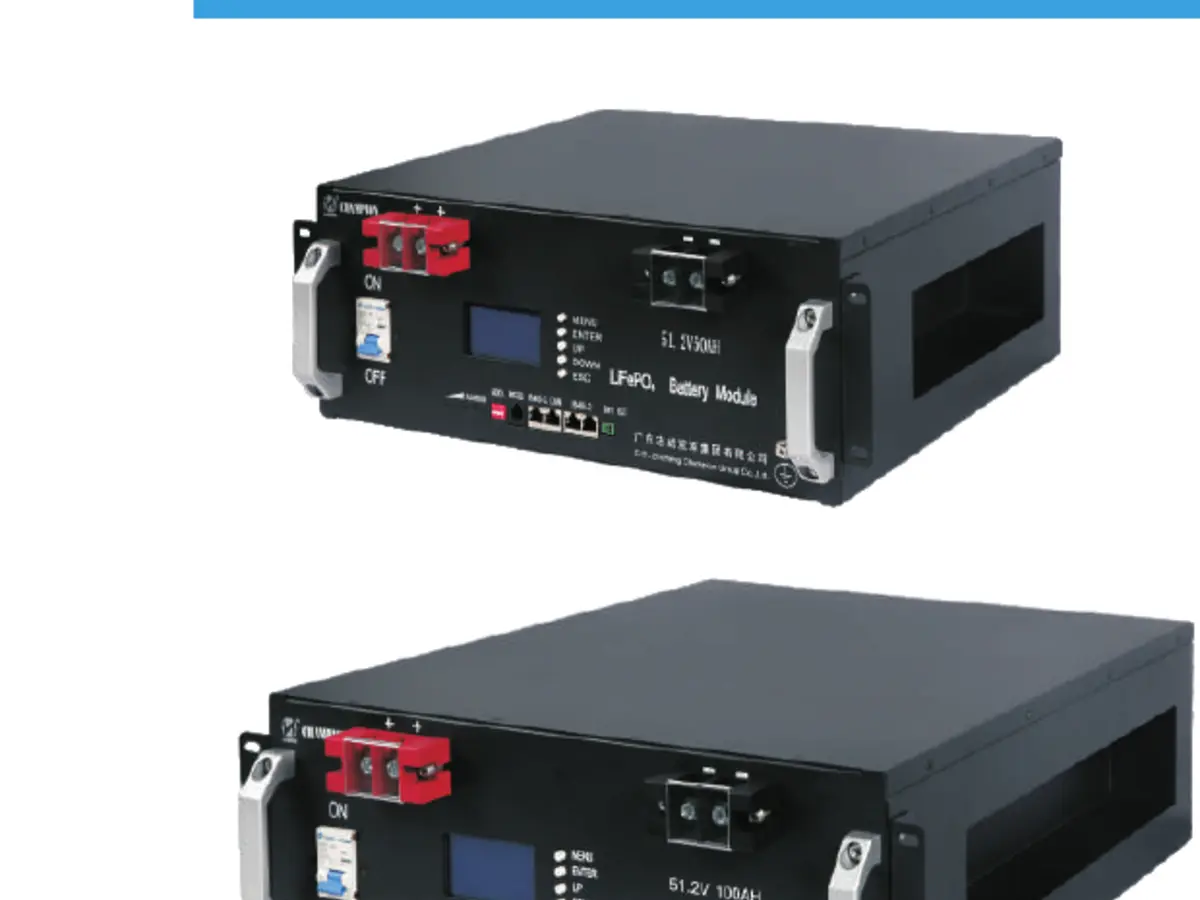
The listed 48V/100Ah model uses a 15-series configuration and a 37.5–54.75V operating range. The 51.2V/100Ah model uses 16 series and a 40–58.4V range. Capacity is the same, but charging voltage, inverter limits and usable system behaviour are not identical.
See the decision in the equipment.
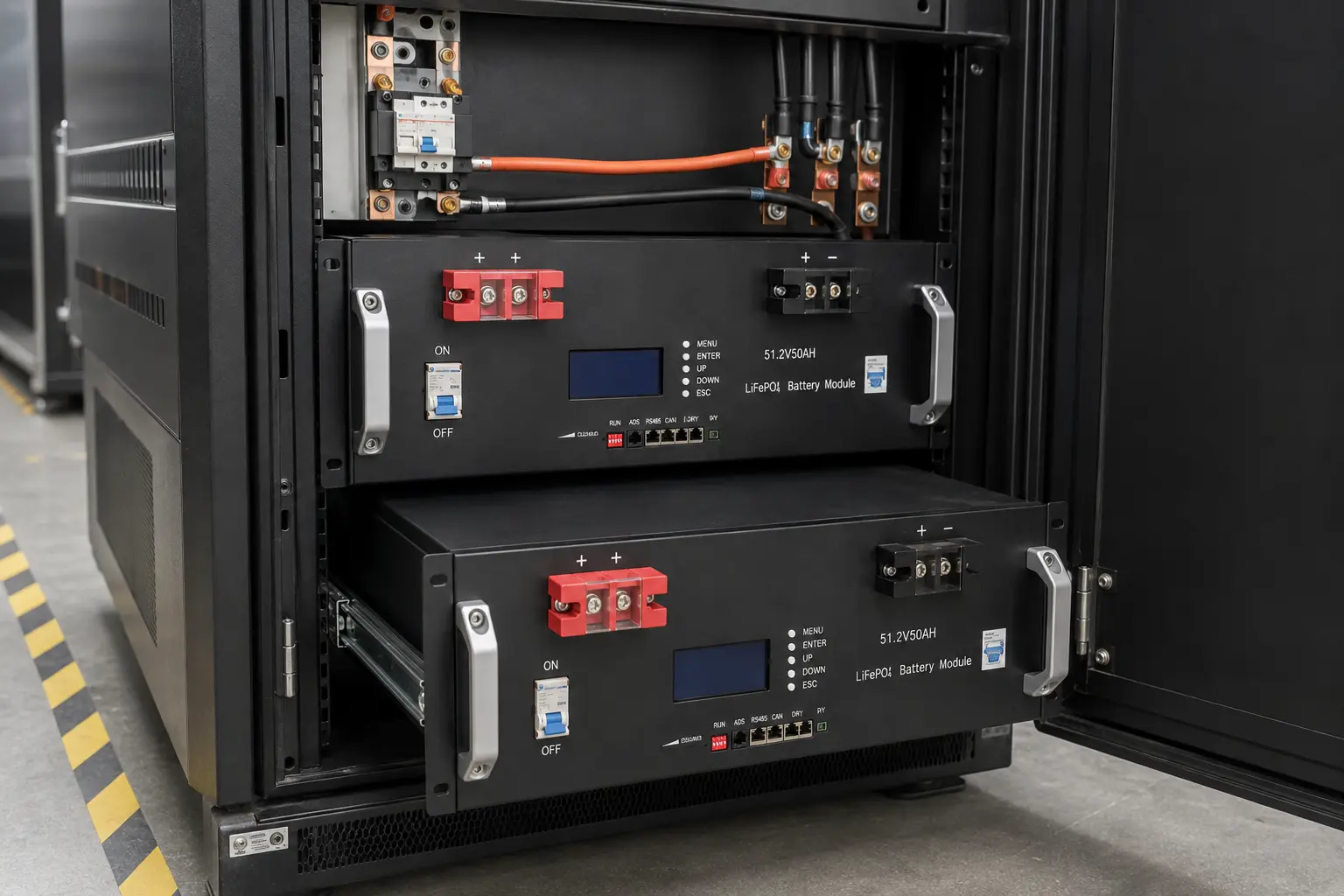
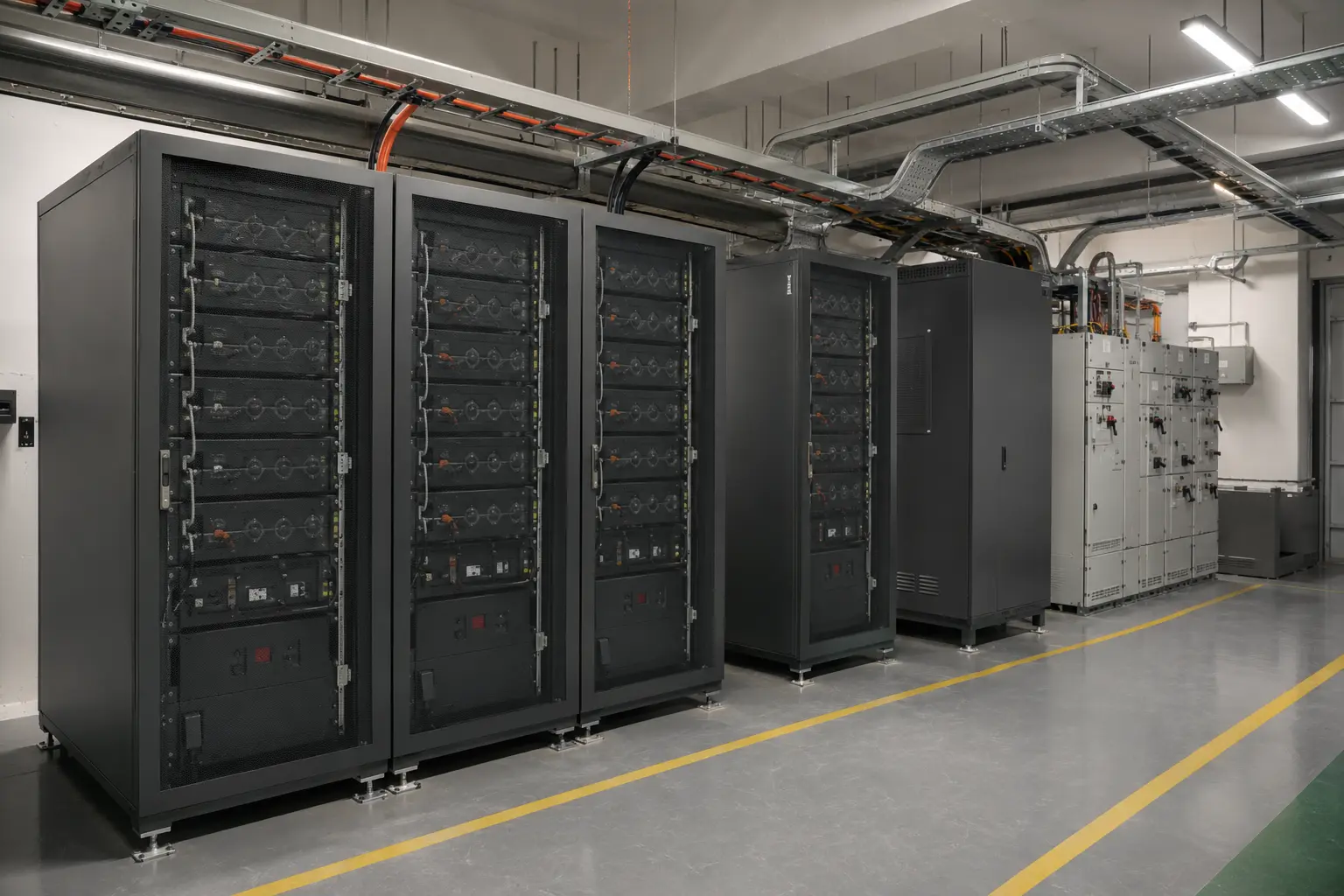
A correct battery choice must work at all three levels. Use the product page for ratings, the interface guide for communication, and the installation information for rack, protection and service access.
Selection framework
Use each checkpoint before treating a catalogue option as a project-ready battery choice.
Check minimum, nominal and maximum battery voltage accepted by the inverter or DC equipment.
VERIFY37.5–54.75V vs 40–58.4VConfirm that the charger or inverter can follow the catalogue charging method and upper voltage.
VERIFY54.75V vs 58.4VSeparate nominal voltage from the actual module energy needed for the runtime objective.
VERIFY4.8, 5.12 or 10.24kWhReview rated and maximum continuous charge and discharge current against the load.
VERIFY50A / 100A / 200A boundariesThe 200Ah model is deeper and heavier than the two listed 100Ah models.
VERIFY425mm vs 800mm depthVerify CAN or RS485 protocol compatibility instead of assuming a matching connector is sufficient.
VERIFYExact inverter protocol documentsAvoid a wrong purchase
The most expensive error is assuming one matching label proves the complete electrical, communication and installation fit.
Application context
Application names are starting points. Load, runtime, inverter, protection and installation conditions determine the final configuration.
Match the rack battery window to the selected inverter and site duty.
Check existing DC plant voltage, charging policy, load and redundancy.
Size from critical load, surge demand, runtime and recharge window.
Coordinate PV inverter limits, battery charging and energy objective.
LiFePO4 product range
Technical FAQ
Answers are limited to the supplied catalogue and normal integration boundaries.
No. The correct choice is the one compatible with the inverter or DC bus, charging limits, current, rack and required energy.
Only after confirming the complete operating and charging voltage window, protection, communication and equipment limits.
Nominal energy is voltage multiplied by capacity. The catalogue lists 4.8kWh for 48V/100Ah and 5.12kWh for 51.2V/100Ah.
The catalogue lists CLEP-51.2V200-R at 51.2V/200Ah and 10.24kWh.
Send the inverter model, DC voltage window, load, runtime, rack depth, communication requirement and quantity.
LiFePO4 rackmount RFQ
Your inquiry will automatically include this source page and the LiFePO4 Rackmount product family.