Battery assembly
Cells, enclosure, battery management, terminals and the interfaces supplied with the confirmed model.
Commercial & industrial BESS · EPC project inquiry
A containerized energy-storage pathway for larger projects requiring coordinated battery racks, PCS, EMS, protection, thermal management and site engineering.
Product range
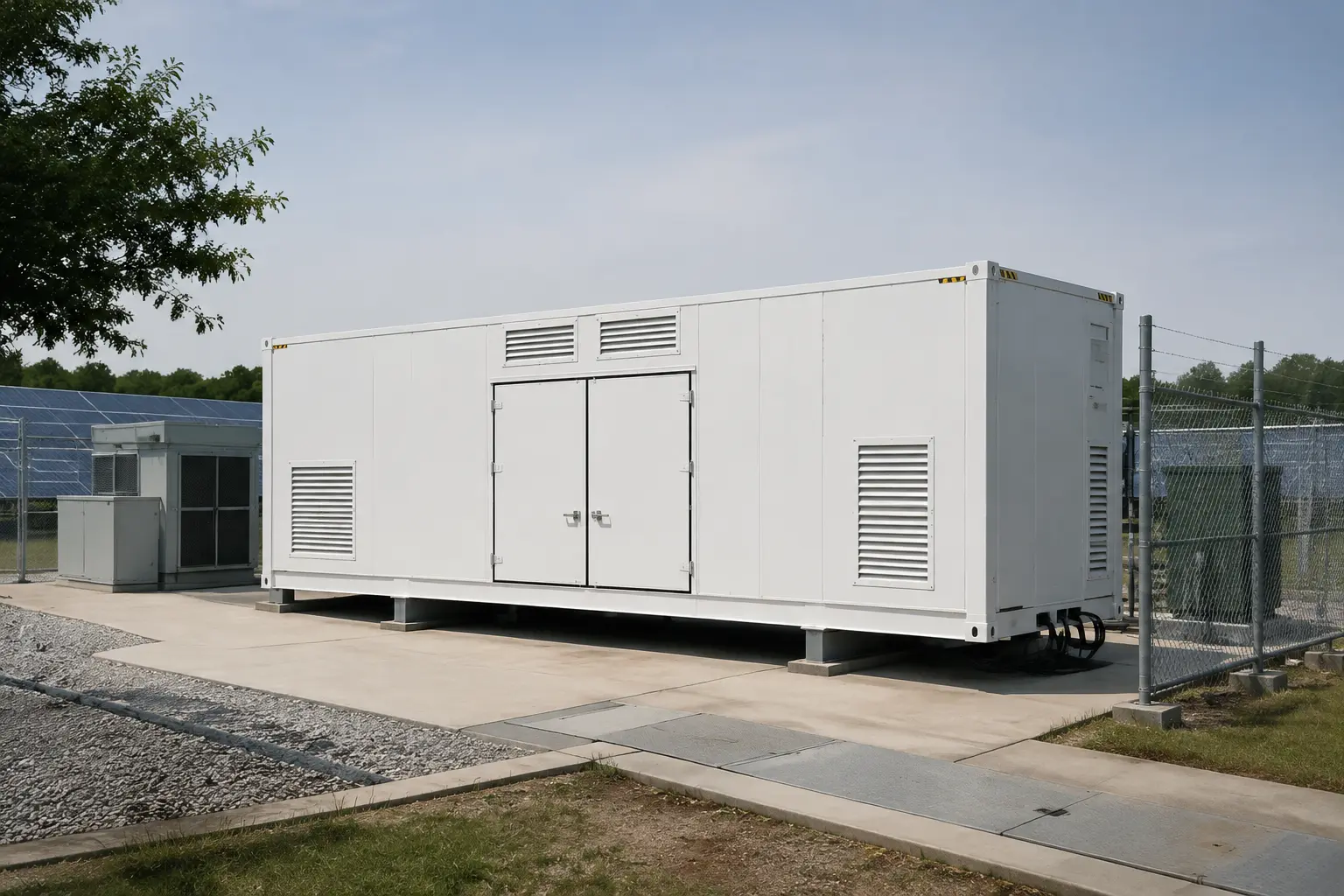
The catalogue shows container ESS arrangements, cabinet and container cases, solar ESS diagrams and system components. A container image is not a final BESS specification: power, energy, PCS, EMS, fire strategy, grid requirements and commissioning must be defined for the site.
Product and system boundary
The selected battery supplies stored DC energy with its enclosure and battery-management functions. A working installation also depends on correctly matched conversion equipment, protection, wiring, controls and commissioning.
Cells, enclosure, battery management, terminals and the interfaces supplied with the confirmed model.
The inverter or PCS must match the battery voltage window, charge limits, power demand and communication profile.
Isolation, breakers or fuses, grounding, cable routing, ventilation and service access remain installation decisions.
Current drawings, model documents, acceptance checks and responsibility for commissioning must be agreed before delivery.
Installation planning
The battery location, inverter, isolation equipment, cable route and service clearance need to be planned together. Include an installation drawing or site photo with your inquiry when available.
Selection questions
These checks help match the product family, inverter and installation conditions.
Define peak shaving, PV shifting, backup, microgrid or other operating objective.
INCLUDE WITH INQUIRYProvide interval load data, required power, usable energy and reserve policy.
INCLUDE WITH INQUIRYConfirm DC range, grid connection, EMS functions and communication boundary.
INCLUDE WITH INQUIRYReview foundation, access, ambient conditions, cable routes and auxiliary power.
INCLUDE WITH INQUIRYDefine protection, isolation, emergency shutdown, thermal and fire strategy.
INCLUDE WITH INQUIRYSeparate battery supply, container integration, installation, commissioning and warranty responsibilities.
INCLUDE WITH INQUIRYTypical applications
Share the actual load, required backup time, electrical interface and available space.
Request a quotation
Technical and purchasing documents
A catalogue is useful for shortlisting. Engineering approval and purchasing require current documents tied to the selected configuration.
Electrical ratings, operating limits, environmental conditions and model revision.
Dimensions, terminals, mounting points, cable access and service clearances.
CAN or RS485 profile, connector, pinout, settings and supported inverter basis.
Shipment documents and available certificates matched to the exact product and destination.
Checks, acceptance criteria and records required before shipment.
MOQ, sample availability, production schedule, packaging and agreed order changes.
LiFePO4 product range
Product FAQ
The catalogue shows a system pathway. Final power, energy, architecture and site scope require project engineering.
Inclusion depends on the quotation boundary. State the required PCS, EMS, transformer and grid-connection scope.
Provide interval load, peak power, required duration, generation data, reserve objective and operating modes.
Yes. Include factory audit, inspection, test, commissioning and handover requirements in the RFQ.
Product inquiry
Send the application, electrical requirement, installation, quantity, destination and required documents.