2.56kWh
25.6V / 100Ah
Lower-voltage solar or backup platform
- CONFIGURATION
- 8S1P
- OPERATING RANGE
- 20–29.2V
- MAX. CHARGE / DISCHARGE
- 50A / 100A
- WEIGHT
- 23kg
Wall-mounted battery · solar storage · backup power
Compare four 25.6V and 51.2V wall-mounted battery models from 2.56kWh to 10.24kWh for solar storage, backup power and small commercial systems.
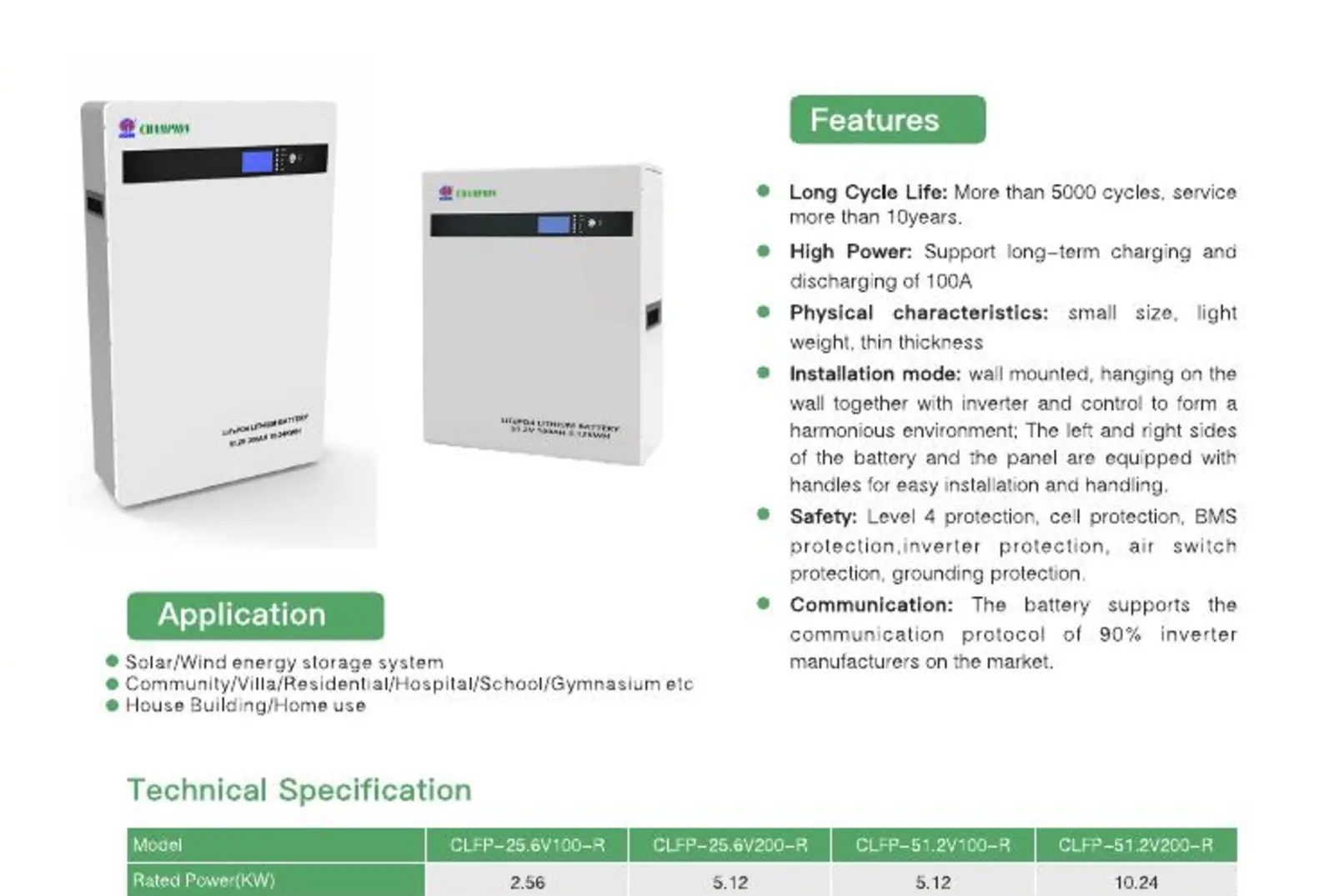
Product boundary
All four catalogue models share the listed enclosure dimensions, but voltage platform, capacity, current and weight change materially. Select the inverter DC range first, then energy and power, and finally confirm that the wall and installation method can carry the selected model.
Model comparison
Specifications below are transcribed from the supplied 2025 catalogue. Request the current datasheet before design approval or purchase.
Lower-voltage solar or backup platform
More energy on a 25.6V DC platform
Common 51.2V-class solar-storage review
Higher-energy wall installation after structural review
Selection logic
CLFP-25.6V200-R and CLFP-51.2V100-R are both listed at 5.12kWh, but they are not electrical substitutes. One uses a 25.6V / 200Ah platform; the other uses 51.2V / 100Ah.
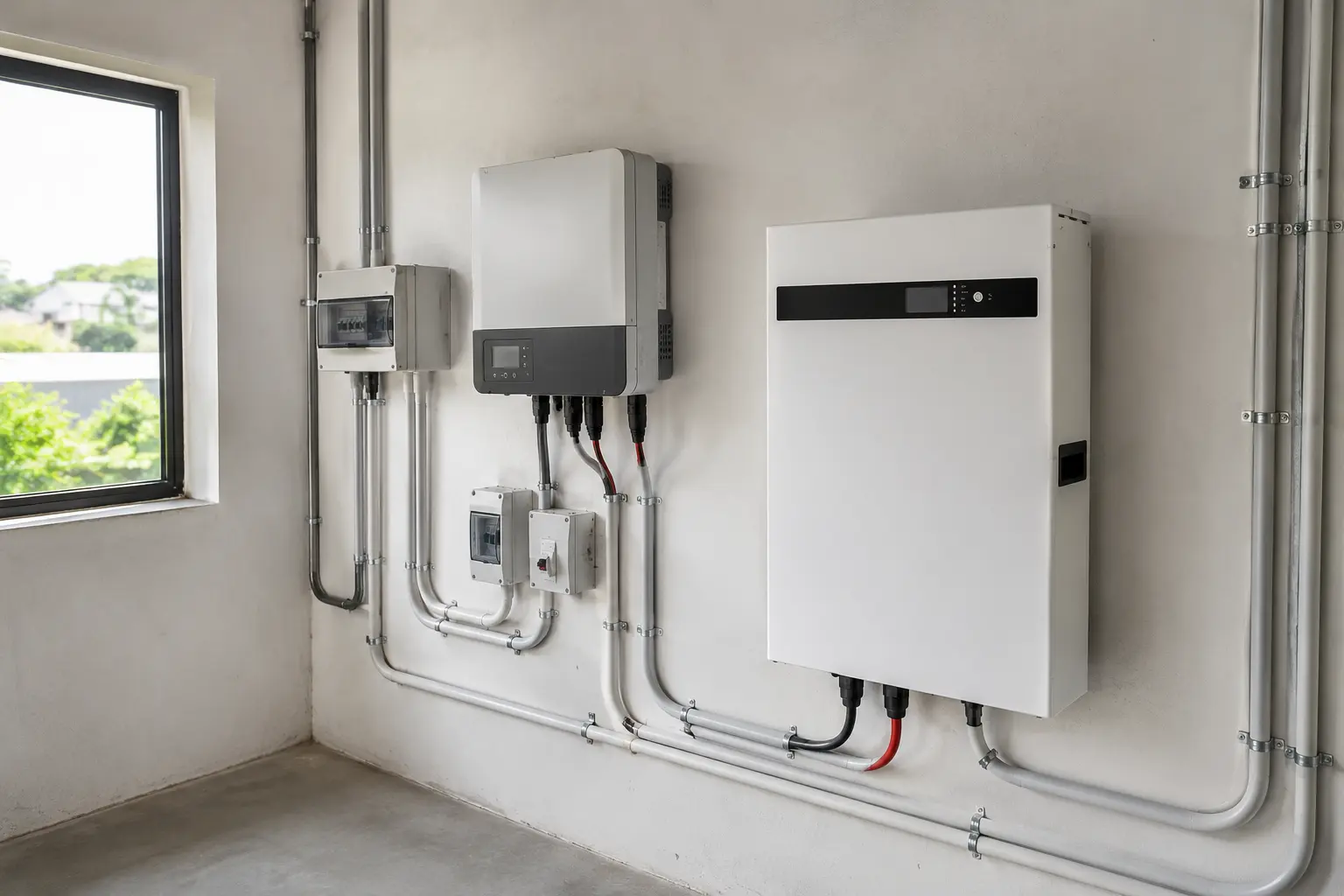
Solar storage installation
A practical wall installation needs structural support, safe cable routing, visible controls and enough space for inspection or replacement.
Installation planning
The largest catalogue model is more than four times the weight of the 23kg entry model, even though the listed enclosure footprint is the same.
Solar inverter compatibility
Use the exact inverter model and firmware in the inquiry. This prevents a nominally correct 51.2V battery from failing at protocol, pinout or charging-control level.
Request Compatibility ReviewMatch minimum, nominal, maximum and charge voltage
Confirm CAN or RS485 profile, pinout and firmware
Compare continuous and peak current with BMS limits
Confirm module count, addressing, cables and current sharing
Define isolation, breaker or fuse, grounding and shutdown
Test SOC, alarms, charge/discharge and communication loss
Solar storage applications
Application labels indicate a possible pathway. Load data, backup priorities, grid arrangement and inverter capability determine final suitability.
Shift daytime PV energy to evening loads after reviewing interval consumption.
Define critical loads, transfer behaviour, runtime and recharge window.
Review load peaks, cycling objective and available wall or service space.
Coordinate parallel units, communications, protection and commissioning.
Approval documents
Catalogue statements are useful for selection. Purchasing and system approval require current, model-specific documents.
Electrical ratings, operating conditions and model revision
Mounting points, dimensions, terminals and clearance
CAN or RS485 profile, pinout and supported inverter basis
UN38.3 and shipment documents for the confirmed configuration
Current IEC 62619, CE or RoHS scope where available
Logo, colour, label, packaging, configuration and MOQ review
Wall-mounted battery FAQ
Availability, commercial terms and evidence remain subject to exact-model confirmation.
CLFP-51.2V100-R is listed at 51.2V, 100Ah and 5.12kWh, with a 40–58.4V operating range.
CLFP-51.2V200-R is listed at 10.24kWh and 98kg. Wall capacity, lifting, anchors and service access must be reviewed before selection.
No. A CAN or RS485 port does not prove protocol compatibility. Confirm inverter model, firmware, pinout and supported battery profile.
The catalogue lists up to 16P. The actual design still requires confirmation of firmware, addressing, current sharing, cables, protection and commissioning.
No. The catalogue lists IP54, but site exposure, water direction, temperature, condensation, enclosure interfaces and local installation rules must be reviewed.
Only after checking voltage range, current, communication, mounting, cable route, protection and service access. The enclosure format alone does not establish interchangeability.
Yes. Include logo, enclosure colour, label, packaging, quantity and destination in the inquiry. Feasibility, MOQ and lead time require manufacturer confirmation.
Request the current datasheet, mechanical drawing, BMS or protocol information, transport documents and exact-model certification evidence required by the project.
Wall-mounted LiFePO4 inquiry
We will identify the relevant model, missing compatibility information and documents required for a useful quotation.