Custom sodium-ion module engineering
Sodium-Ion Battery Modules for OEM Integration
A defined electrical and mechanical building block between qualified cylindrical cells and the finished battery pack—engineered around your equipment, not selected from a generic voltage label.
QUALIFIED CELL BASISDEFINED INTERFACESPROJECT EVIDENCE REVIEW
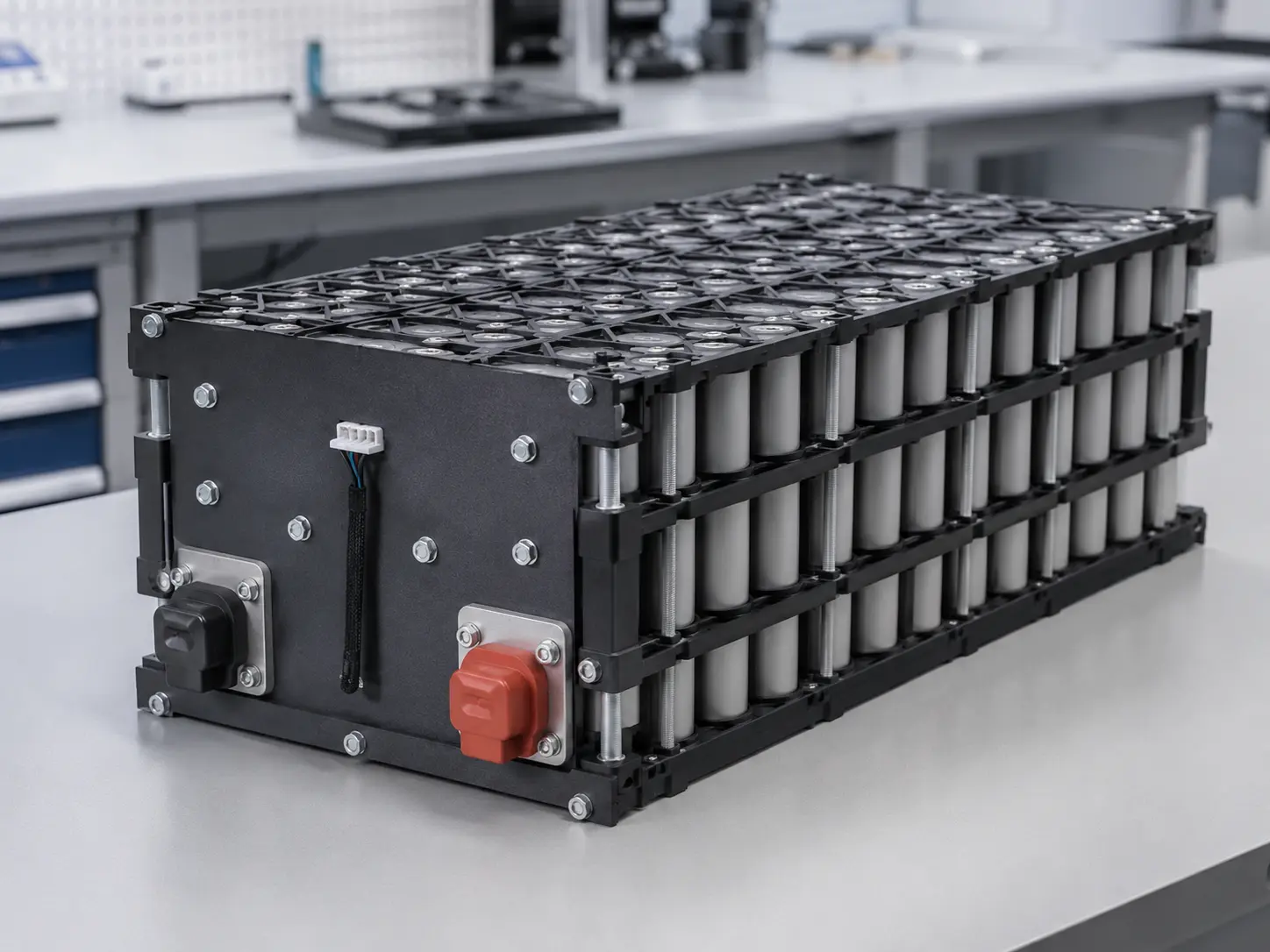
Choose the correct supply level
Is a module the right boundary for your project?
01 / CELLQualified electrochemical unitFor integrators who own module and pack engineering.02 / MODULE · THIS PAGEConnected, retained cell assemblyFor OEMs that need a repeatable building block inside their pack. 03 / PACKComplete application batteryFor projects requiring BMS, enclosure and external interfaces.
Four connected decisions
A module is more than grouped cells.
Electrical, sensing and mechanical choices must close against the same load profile and pack architecture before prototype commitments.
Electrical topology
Series and parallel structure follows the operating window, runtime and selected cell—not a catalog headline.
Current path
Busbars, terminals and joints are reviewed against continuous, peak and transient demand.
Sensing boundary
Voltage and temperature points are defined together with the pack-level BMS interface.
Mechanical retention
Spacing, insulation, restraint, mounting and service access are resolved as one assembly.
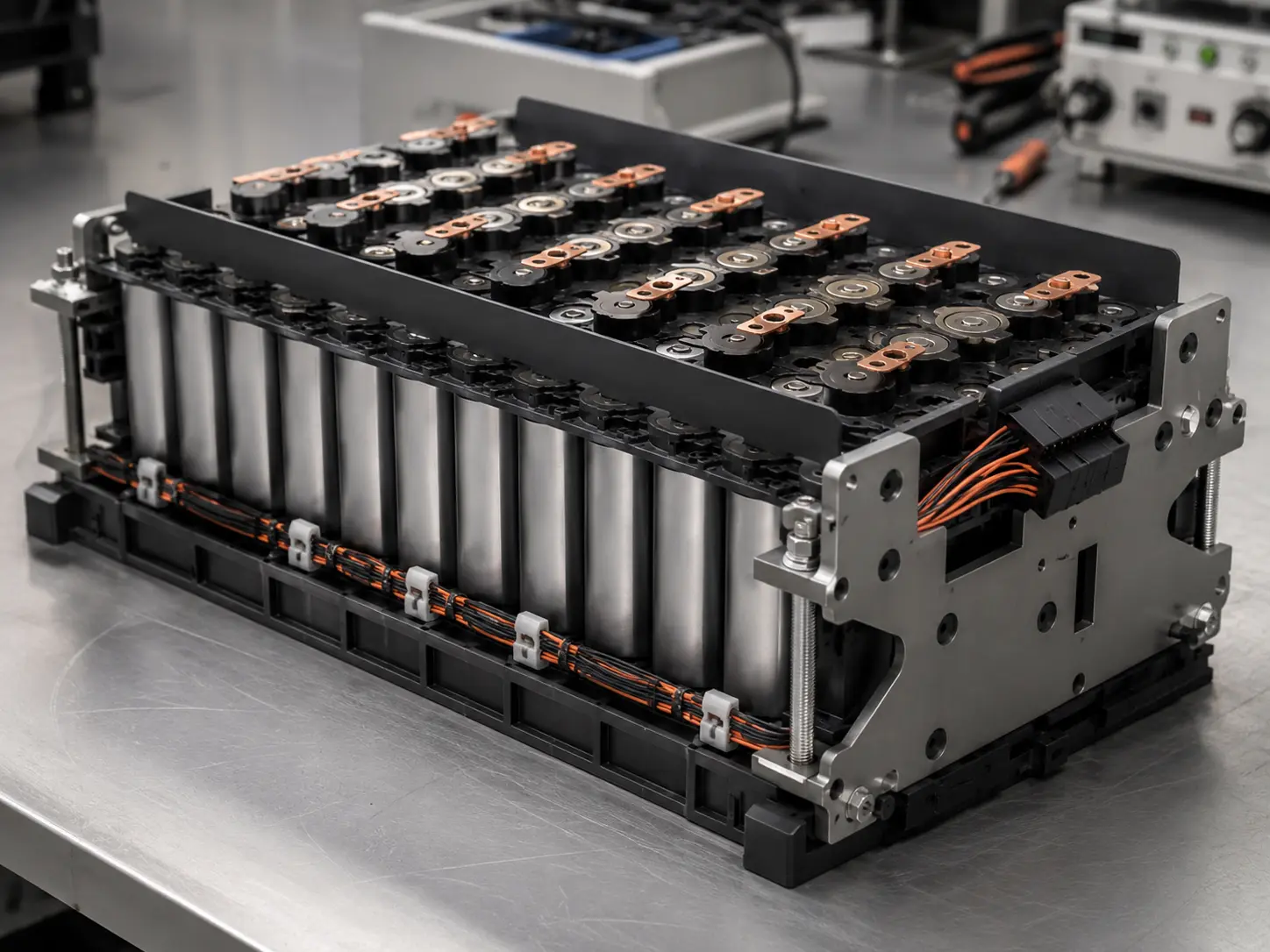
Module engineering boundary
Define what the module owns—and what the pack still must solve.
A clear boundary prevents duplicated electronics, ambiguous protection responsibility and late mechanical redesign.
Typically defined at module level
- Qualified cell basis and arrangement
- Internal conductors and insulation
- Cell retention and module mounting
- Voltage / temperature sensing points
- Module terminals and service connections
Typically completed at pack level
- Main BMS and system protection logic
- Contactors, fusing and disconnect strategy
- Pack enclosure and environmental sealing
- External power and communication interfaces
- Application validation and compliance pathway
Evidence before commitment
A reviewable module definition—not an unexplained rating.
Published values require an exact configuration and supporting conditions. Cell data, calculated architecture, prototype observations and production claims remain separate.
Read our evidence approach →01CELL BASISExact product and document identityCONFIRM
02ARCHITECTUREElectrical and mechanical topologyDEFINE
03INTERFACESensing, terminals and pack boundaryREVIEW
04VERIFICATIONPrototype checks and acceptance planPLAN
Technical RFQ inputs
Ten inputs make a module quotation useful.
Include sample or prototype quantity, expected annual volume and target timing. Missing values can remain open, but should be identified.
Submit module requirements01Application and load profile
02Nominal and operating voltage
03Required runtime or capacity
04Continuous, peak and pulse current
05Charge / discharge temperature
06Available dimensions and mass target
07Terminal and connector requirements
08Sensing and BMS boundary
09Prototype and annual quantity
10Target schedule and compliance needs
Module buyer FAQ
Questions to close before prototype.
Final suitability and supply status are confirmed against the actual project and evidence package.
What is included in a sodium-ion battery module?+
A module combines qualified cells with a defined series/parallel topology, electrical connections, insulation, mechanical retention and agreed sensing points. The enclosure, complete BMS, contactors and external interface normally remain pack-level decisions unless scoped otherwise.
Can module voltage and capacity be customized?+
Yes. A candidate topology can be developed around the operating voltage and runtime or capacity, but it must also satisfy current, temperature, space, service and cell-evidence constraints.
Does the module include a BMS?+
Not automatically. The monitoring and protection boundary is defined per project. A module may provide sensing connections while the finished pack carries the main BMS and protection hardware.
Can you build modules with 32700 sodium-ion cells?+
A 32700 cylindrical-cell basis can be evaluated after the exact cell identity, documentation, operating envelope and required module geometry are reviewed.
What evidence is available before prototyping?+
The review identifies the exact cell and source documents, candidate topology, interface definition, relevant test conditions and acceptance evidence required for the prototype stage.
What is needed for a module quotation?+
Provide the application, voltage, runtime or capacity, continuous and peak current, temperature, space, interfaces, prototype quantity, annual quantity and schedule.
Sodium-ion module inquiry
Define the module around the equipment.
Share voltage, current, runtime, temperature, space, interfaces and quantity.
Start Engineering Review ↗