Load and runtime
Continuous load, start-up demand, peak events and required backup duration shape power and energy sizing.
Industrial energy storage systems
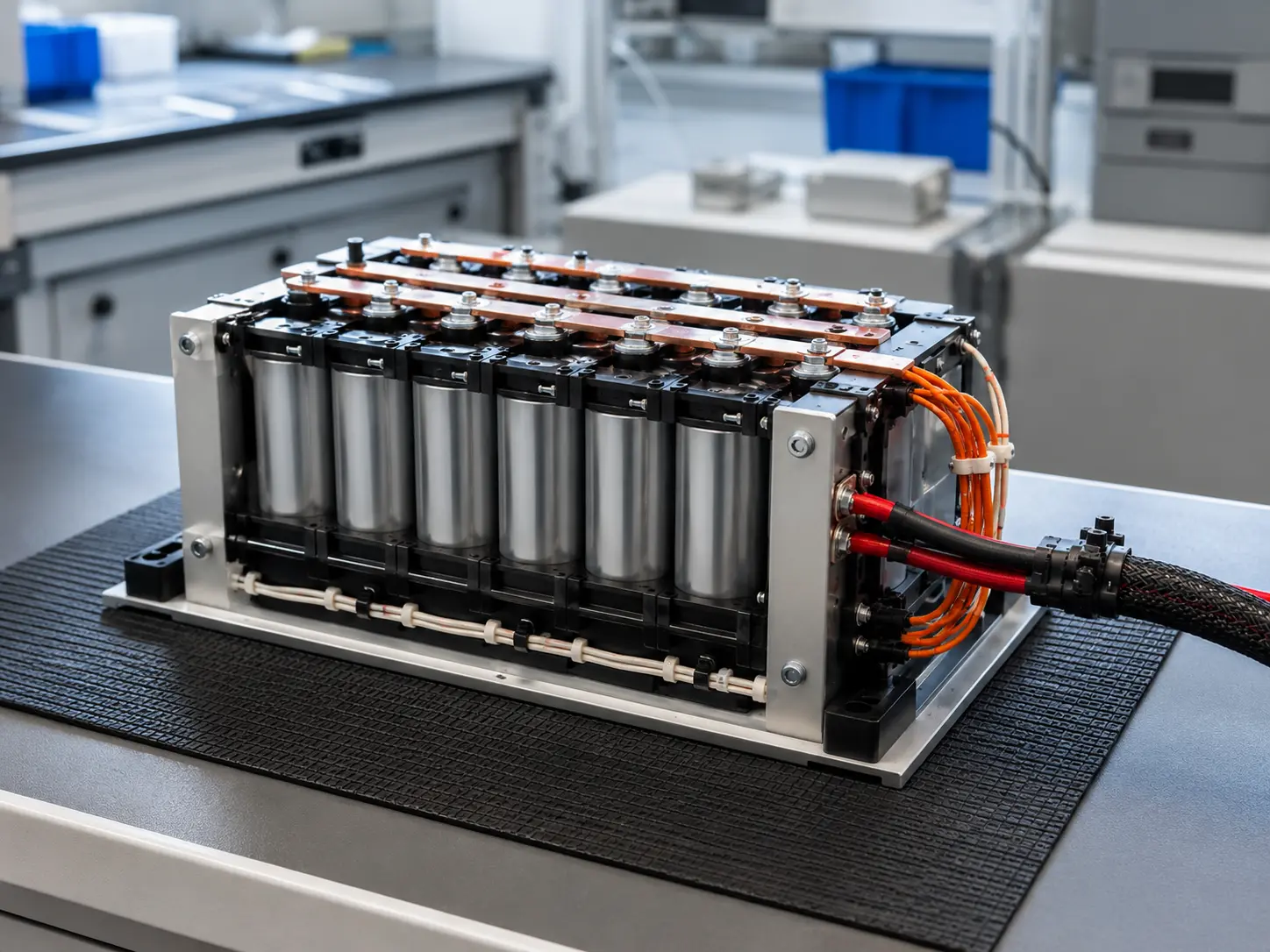
A cell-to-system engineering path for factory backup, operational resilience, renewable integration and distributed industrial sites—defined by what the facility must accomplish, not by a generic cabinet promise.
Application first
A viable ESS must align power, runtime, duty cycle, controls, installation environment, grid context, service strategy and delivery responsibility. Those boundaries determine what should be quoted and who must verify it.
Continuous load, start-up demand, peak events and required backup duration shape power and energy sizing.
Backup, peak management, renewable capture and resilience create different control and cycling requirements.
Electrical interface, communications, protection, space, ventilation and installation boundaries must be defined.
Project location, responsible parties, documentation, testing and acceptance path affect the proposed system.
Review catalogue-defined 48V/100Ah, 51.2V/100Ah and 51.2V/200Ah modules when a 19-inch rack battery fits the industrial ESS architecture.
Open technical product page →Engineering pathway
Each gate reduces a different commercial and engineering risk before a system configuration is treated as project-ready.
Clarify whether the project is backup, load shifting, renewable integration, resilience or a combined duty.
OUTPUTProject objective statementReview interval data, continuous and peak load, runtime, cycling frequency and critical loads.
OUTPUTSizing input envelopeDevelop the cell, module, rack, BMS, PCS and control boundary at the appropriate project level.
OUTPUTPreliminary architectureClose site, compliance, commissioning, documentation, schedule and supply responsibilities.
OUTPUTQualified proposal pathApplication fit
Application labels are starting points, not automatic product approvals. Final suitability follows the actual operating envelope.
Support defined production, control or safety-critical loads during supply interruption.
Evaluate storage against site load shape, tariff mechanism and operational constraints.
Align generation profile, facility consumption and storage objective before sizing.
Plan resilience for sites with limited service access or unstable utility supply.
Define storage functions within a wider generation, control and protection architecture.
Review availability, redundancy, monitoring and recovery expectations at system level.
Evidence & decision boundary
Cell data, module tests and cabinet specifications are different evidence levels. We keep them separated and link each published or quoted value to the configuration, condition and project decision it supports.
Review evidence governance →Prepare your RFQ
Share the known values and mark anything still undecided. We use these inputs to identify missing evidence, integration risks and the most practical next step.
Submit Project RequirementsTechnical FAQ
These answers establish the review process. Product specifications and commercial terms require project confirmation.
Sizing begins with the site objective, load profile, peak demand, runtime, cycling expectation, environment and system losses. A generic kWh value is not enough.
They may be considered, subject to product evidence and a system review covering power, runtime, controls, environment and required availability.
Industrial projects often involve production loads, demanding environments, site integration and higher consequence of interruption. The distinction is ultimately defined by the duty and project boundary.
The proposed scope can include battery modules, racks, BMS, enclosure and related system interfaces. Exact supply responsibility is confirmed during project review.
Provide the load profile, critical load, peak power, runtime, project objective, cycling expectation, location, environment, available space and schedule.
Yes, the review can include solar profile, facility load and storage objective. Final design depends on the wider electrical and control architecture.
Engineering inquiry
We will turn them into the questions, evidence and preliminary architecture required for an industrial ESS proposal.