19-inch rack · ESS · telecom · backup power

48V / 51.2V Rackmount LiFePO4 Battery

Compare 48V 100Ah, 51.2V 100Ah and 51.2V 200Ah rack batteries by energy, operating voltage, current, rack depth and communication interface.

48V / 100Ah51.2V / 100Ah51.2V / 200Ah
48V and 51.2V LiFePO4 rackmount batteries for energy storage
48V and 51.2V LiFePO4 batteries for standard 19-inch rack installation

Product overview

A rack battery is an integration component—not a complete ESS by itself.

Each module combines LiFePO4 cells, a built-in BMS, front-panel connections and communications in a 19-inch rack format. The inverter, DC protection, cabinet, cabling, current sharing and commissioning boundary remain project decisions.

MANUFACTURING SOURCEGuangdong Zhicheng Champion Group Co., Ltd.
PROJECT SALES & RFQ SUPPORTSodium Energy Systems
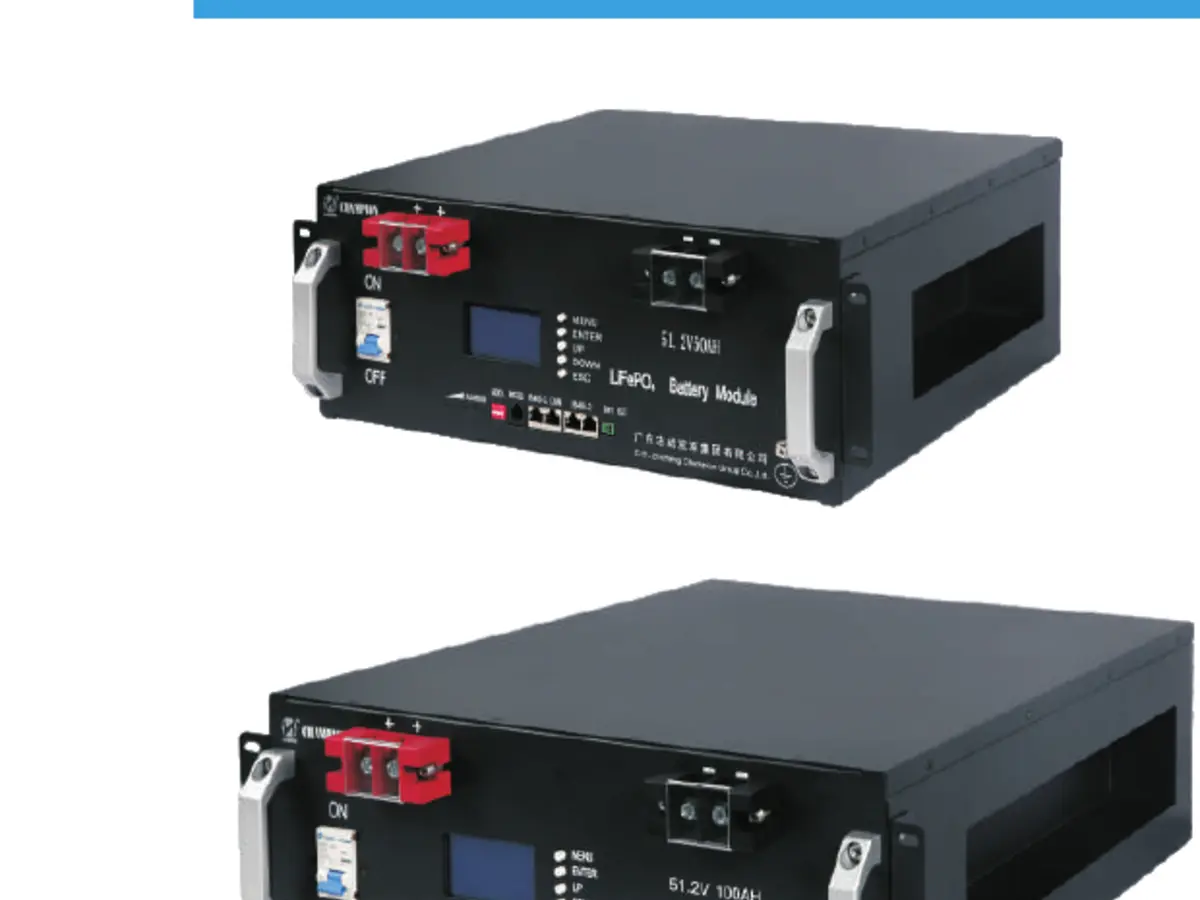
Front and side view of rackmount LiFePO4 battery modules with display, terminals and communication ports
CATALOGUE PRODUCT VIEW · PORT AND LABEL DETAILS MAY VARY BY CONFIRMED MODEL
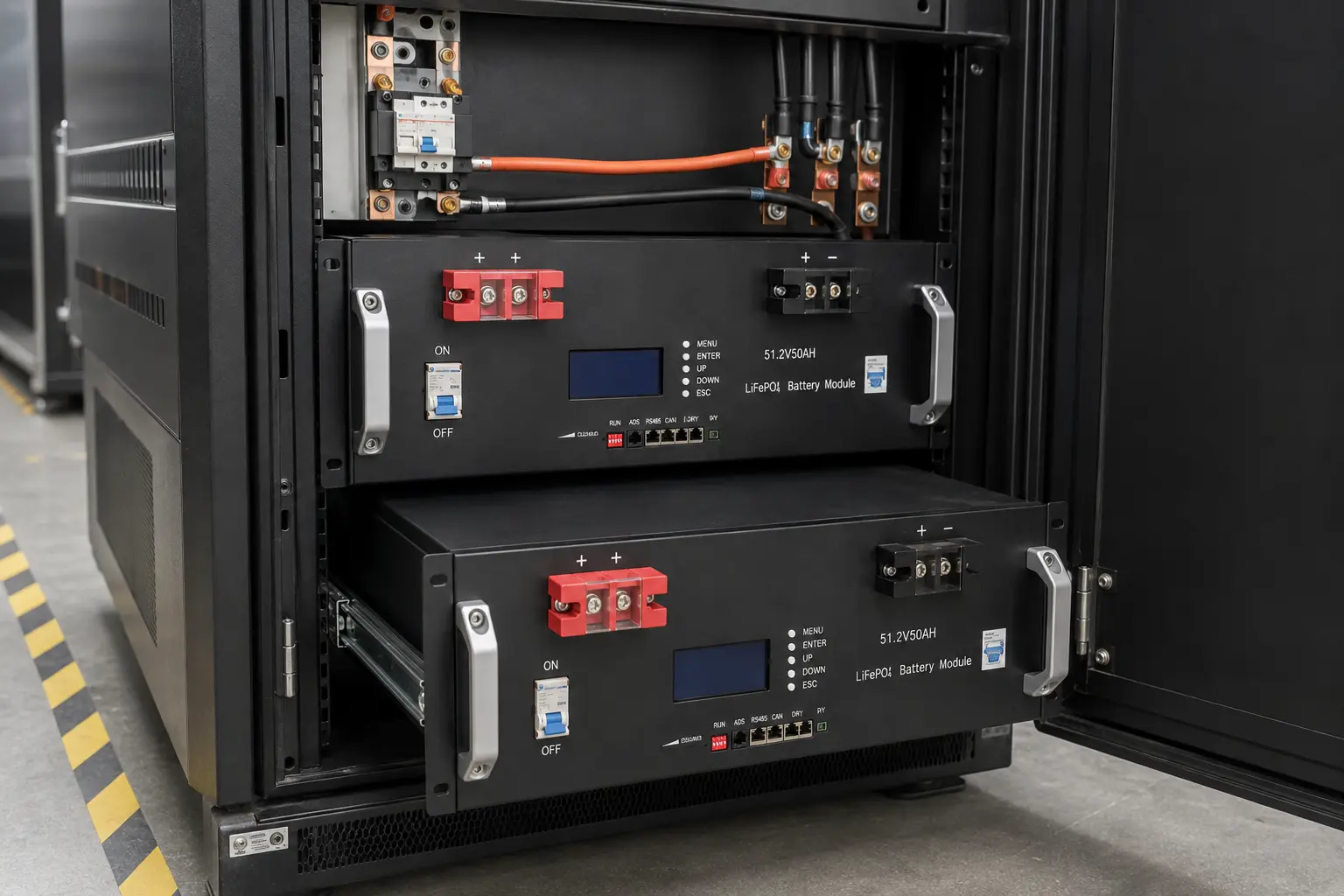
48V and 51.2V rackmount LiFePO4 batteries installed in a 19-inch ESS cabinet with protection and service access

Rack and interface planning

Front access, rear cable space and rack depth all matter.

The battery face provides controls, power terminals and communication access. The cabinet must also accommodate DC protection, cable bend radius, airflow and safe module removal.

01Power terminalsCable size, polarity and torque02BMS communicationCAN or RS485 protocol and pinout03ProtectionBreaker, fuse and disconnect04Service accessRack depth, airflow and module removal

Quick specifications

Compare the three catalogue configurations.

Values below are transcribed from the supplied 2025 Lithium Battery Catalogue. Request the current model data before design approval or purchase.

01 · CLEP-48V100-R

48V / 100Ah

4.8 kWh

48V-class DC bus and standard-depth rack review

CELL CONFIGURATION
15S1P
OPERATING RANGE
37.5–54.75V
CHARGING METHOD
CC–CV 54.75V, 0.05C cut-off
RATED CHARGE / DISCHARGE
50A (0.5C)
MAX. CONTINUOUS CURRENT
100A charge / 100A discharge
SIZE
483 × 425 × 132.5 mm
WEIGHT
46.5 kg
Ask about CLEP-48V100-R →
02 · CLEP-51.2V100-R

51.2V / 100Ah

5.12 kWh

51.2V inverter platform and standard-depth rack

CELL CONFIGURATION
16S1P
OPERATING RANGE
40–58.4V
CHARGING METHOD
CC–CV 58.4V, 0.05C cut-off
RATED CHARGE / DISCHARGE
50A (0.5C)
MAX. CONTINUOUS CURRENT
100A charge / 100A discharge
SIZE
483 × 425 × 132.5 mm
WEIGHT
48 kg
Ask about CLEP-51.2V100-R →
03 · CLEP-51.2V200-R

51.2V / 200Ah

10.24 kWh

Higher energy per module where 800mm depth is available

CELL CONFIGURATION
16S2P
OPERATING RANGE
40–58.4V
CHARGING METHOD
CC–CV 58.4V, 0.05C cut-off
RATED CHARGE / DISCHARGE
100A (0.5C)
MAX. CONTINUOUS CURRENT
200A charge / 200A discharge
SIZE
483 × 800 × 132.5 mm
WEIGHT
88 kg
Ask about CLEP-51.2V200-R →

Shared catalogue details

Installation, communication and operating boundaries.

These entries are shown as catalogue-listed characteristics. Exact document revision, certification scope and inverter compatibility should be confirmed during technical review.

Request Technical Data
01Battery chemistryLFP (LiFePO4)
02InstallationStandard 19-inch industrial rack
03CommunicationUSB / RS232 / RS485 / CAN
04BMSBuilt-in; system protocol compatibility requires confirmation
05Optional interfaceLCD screen / Bluetooth / Wi-Fi
06Ingress protectionIP21
07Maximum parallel connection16P
08Operating temperatureCharge 0–50°C; discharge −10–50°C
09Storage temperature10–35°C
10Catalogue cycle statement≥6,000 cycles at 0.5C/0.5C, 25°C, 90% DOD, 70% EOL
11Catalogue-listed standardsIEC 62619 / UN38.3 / CE / RoHS

BMS integration

Ports are listed. Protocol compatibility must still be verified.

The built-in BMS provides the battery-side monitoring and protection boundary. A successful ESS or telecom integration also depends on the selected inverter or controller protocol, wiring, addressing, parallel configuration and current documentation.

  • Confirm the physical communication port and protocol.
  • Request the current inverter compatibility information.
  • Review parallel-operation and current-sharing requirements.
  • Define alarms, shutdown responsibility and commissioning tests.

48V vs 51.2V selection guidance

Match the DC operating window before comparing capacity.

Nominal voltage is only a label. Use inverter limits, charging voltage, required energy, current and rack depth to make the selection.

48V / 100Ah

15-series architecture

37.5–54.75V

Review when the inverter or DC bus is designed around this catalogue voltage window and 4.8kWh module energy.

51.2V / 100Ah

16-series, standard depth

40–58.4V

Review for a 51.2V nominal platform needing 5.12kWh in the listed 425mm-deep enclosure.

51.2V / 200Ah

16-series, higher capacity

40–58.4V

Review when 10.24kWh is required per listed module and the deeper 800mm enclosure can be accommodated.

19-inch rack planning

Width is standard. Depth, weight and service space are not.

All three catalogue models list a 483mm front width and 132.5mm height. The 200Ah configuration changes the practical installation because its listed depth reaches 800mm and its weight reaches 88kg.

FRONT WIDTH483 mmHEIGHT132.5 mm100Ah DEPTH425 mm200Ah DEPTH800 mm
100Ah425mm
200Ah800mm
NOT TO SCALE · CONFIRM CABINET, CABLE BEND RADIUS, AIRFLOW AND SERVICE CLEARANCE

Inverter compatibility checklist

A matching CAN port does not prove compatibility.

Send these six items together. This avoids a quotation that matches nominal voltage but fails at protocol, firmware or commissioning level.

Request Compatibility Review
  1. 01Exact inverter modelBrand, model, firmware and supported battery profile
  2. 02DC operating windowMinimum, nominal, maximum and charge-voltage limits
  3. 03CommunicationCAN or RS485 protocol, connector, pinout and baud rate
  4. 04Parallel architectureModule count, master/slave addressing and current sharing
  5. 05Protection boundaryBreaker, fuse, disconnect, grounding and emergency shutdown
  6. 06CommissioningSOC, alarms, charge/discharge limits and communication-loss response

Technical document request

Ask for the evidence needed by your approval process.

Document availability and scope are confirmed against the selected model, revision, quantity and destination market.

01

Product datasheet

Electrical ratings, operating limits and environmental conditions

02

Mechanical drawing

Dimensions, rack depth, mounting, terminals and service clearance

03

BMS / protocol information

Port purpose, pinout, message profile and compatible inverter basis

04

Transport package

Applicable UN38.3 and shipment documentation for the confirmed model

05

Certification evidence

Current certificate and report scope matched to the exact model

06

Inspection basis

Incoming, assembly and final-test records available for the project

Applications

ESS, telecom and backup-power pathways.

Catalogue application labels establish a possible use—not automatic system approval.

01

ESS

Solar and wind energy storage systems with a compatible inverter and system-level controls.

02

Telecom

Rack-based battery backup for telecommunication equipment after voltage, runtime and interface review.

03

Backup power

Standby-power projects for residential, hospital, school or factory loads, subject to project qualification.

04

Data centre

Battery support for data-centre applications where runtime, redundancy and system acceptance are defined.

05

Electric power

Battery modules used within a reviewed electric-power system architecture.

Rackmount battery FAQ

What buyers should confirm before quotation.

The supplied catalogue is the evidence source for listed specifications; current technical documents remain part of project review.

What rack sizes do these batteries use?+

The catalogue states standard 19-inch industrial rack installation. The 100Ah models are listed at 483 × 425 × 132.5 mm; the 51.2V/200Ah model is 483 × 800 × 132.5 mm. Rack depth and service clearance must be checked.

What is the difference between 48V and 51.2V?+

The 48V model uses a 15S1P configuration and a 37.5–54.75V operating range. The 51.2V models use 16-series architecture and a 40–58.4V range. Select by the inverter or DC bus operating window—not nominal voltage alone.

Which communication ports are available?+

The catalogue lists USB, RS232, RS485 and CAN. The physical port and protocol do not by themselves prove compatibility with a specific inverter; request the current communication documentation.

Is the BMS integrated?+

Yes, the catalogue identifies a built-in BMS and lists protection functions. Final inverter, parallel-operation and system-control compatibility must be confirmed for the selected model.

Can the batteries be connected in parallel?+

The catalogue lists a maximum parallel connection of 16P. A project must still confirm firmware, current sharing, protection, cabling and commissioning requirements.

Which model is suitable for backup power?+

Choose from the required energy, DC voltage window, load current, rack depth, inverter interface and redundancy objective. The 200Ah model increases listed energy and depth; it is not automatically the correct choice for every backup project.

Can I request technical data before quotation?+

Yes. Provide the target model, inverter, application, quantity and project location so the relevant specification, communication and certification documents can be requested.

Rackmount LiFePO4 inquiry

Request technical data or start a quotation.

Send the target model, inverter, load, runtime, rack constraints, quantity and project location.